


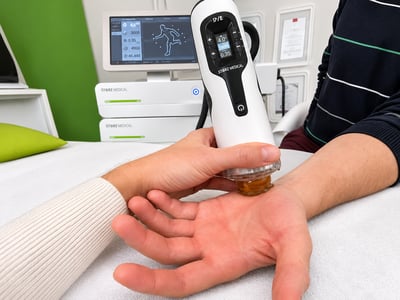
 For patients with carpal tunnel syndrome, symptoms can cause discomfort from the workday into the night. Numbness makes small objects harder to handle, tingling interrupts familiar tasks, and pain can disrupt sleep. When symptoms persist, patients want to know what else might help them regain comfortable, reliable use of their hands.
Shockwave gives medical professionals an important evidence-based, nonsurgical option for treating carpal tunnel syndrome. EPAT® (Extracorporeal Pulse Activation Technology, or Radial Pressure Wave) and ESWT (Extracorporeal Shockwave Therapy, or Focused Shockwave) use acoustic energy to target affected tissues. Research supports their potential to reduce symptoms and improve hand function as part of a broader, multimodal treatment plan.
Below, we review the evidence for Shockwave, explain how it can complement other care approaches, and explore the technology and support practices needed to incorporate it into a working practice.
Evidence-Based Treatment for Carpal Tunnel Syndrome
Carpal tunnel syndrome develops when the median nerve is compressed as it passes through a narrow space in the wrist. This pressure disrupts sensation and hand function, producing numbness, tingling, pain, and weakness. Recommended treatment depends on the severity of nerve involvement and how symptoms affect the patient’s daily life. For mild-to-moderate cases, care often begins with:
- Night splinting to keep the wrist in a neutral position and reduce pressure on the nerve.
- Activity and ergonomic adjustments to limit positions or tasks that aggravate symptoms.
- Targeted rehabilitation, including nerve-gliding exercises where appropriate.
- Corticosteroid injections for temporary symptom relief.
Persistent symptoms, progressive weakness, or significant nerve damage may warrant surgical evaluation to relieve compression.
Shockwave for Carpal Tunnel Syndrome
Shockwave treatment applies acoustic energy through the skin over the carpal tunnel region. Radial Pressure Wave distributes energy across a broader, superficial area, while Focused Shockwave allows more precise targeting at a selected depth. Providers choose the technology and treatment settings based on the patient’s presentation and the anatomy being addressed.
In carpal tunnel care, the aim is to reduce symptoms and support more comfortable hand use. Shockwave can be incorporated into office visits alongside rehabilitation, with progress assessed through the problems that brought the patient in: interrupted sleep, difficulty handling objects, or discomfort during work. Continued assessment of sensation and strength helps guide care as treatment progresses.
Research Highlights: Shockwave and Carpal Tunnel Syndrome
30+ years of Shockwave research have built an immense body of evidence on its powerful healing capabilities across a number of common conditions, including carpal tunnel:
- Greater symptom relief when added to physiotherapy: A randomized trial of 60 patients with mild-to-moderate carpal tunnel syndrome found that adding four Radial Pressure Wave sessions using a STORZ Medical device produced greater improvements in pain, tingling, and symptom severity than conventional physiotherapy alone. Benefits persisted through the four-week follow-up, while sensory and motor nerve conduction measures improved only in the Shockwave groups.
Study: The effect of radial shockwave on the median nerve pathway in patients with mild-to-moderate carpal tunnel syndrome: a randomized clinical trial. Journal of Orthopaedic Surgery and Research, 2022.
- Reduced pain and improved hand function across 10 trials: A systematic review and meta-analysis involving 433 patients found that Shockwave significantly improved pain, symptom severity, and hand function in patients with carpal tunnel syndrome.
Study: Effects of shock wave therapy in patients with carpal tunnel syndrome: a systematic review and meta-analysis. Disability and Rehabilitation, 2022.
- Greater improvements when combined with nerve mobilization: A study of 92 patients with mild-to-moderate carpal tunnel syndrome compared nerve mobilization alone with nerve mobilization plus Shockwave. The combined-treatment group experienced greater improvements in pain, symptoms, upper-limb function, and daily activity scores, alongside better median nerve electrophysiological results.
Study: Study on the effect, safety, prognosis quality and application value of extracorporeal shock wave based neural activity in carpal tunnel syndrome patients. BMC Musculoskeletal Disorders, 2023.
- Greater improvements than corticosteroid injections at three and six months: A systematic review of 19 randomized trials involving 856 patients found that Shockwave improved pain, function, and nerve conduction measures in mild-to-moderate carpal tunnel syndrome. Comparisons with corticosteroid injections showed similar short-term outcomes but greater improvements in pain and function with Shockwave at three and six months.
Study: Effects of Extracorporeal Shock Wave Therapy in Patients with Mild-to-Moderate Carpal Tunnel Syndrome: An Updated Systematic Review with Meta-Analysis. Journal of Clinical Medicine, 2023.
- Pain relief and improved nerve conduction at one month: A double-blind, placebo-controlled trial evaluated Radial Pressure Wave in patients with mild-to-moderate carpal tunnel syndrome, with both groups receiving night splints and tendon and nerve-gliding exercises. Among the 37 participants who completed the study, researchers reported improvements in pain, function, and nerve conduction measures following active treatment at the one-month assessment.
Study: Clinical and electrophysiological efficacy of extracorporeal shock-wave therapy in carpal tunnel syndrome: a placebo-controlled, double-blind clinical trial. Revista da Associação Médica Brasileira, 2023.
- Treatment intensity influenced functional recovery: A 2025 randomized trial compared higher- and lower-pressure Radial Pressure Wave delivered over four weekly sessions, with both groups also receiving conventional physical therapy, orthoses, and tendon-gliding exercises. Both groups experienced clinical improvements, while the researchers reported greater gains in hand function and selected nerve conduction measures with the higher-pressure treatment. The differences were small to moderate, highlighting the importance of treatment parameters within a multimodal approach.
Study: Comparison of high- and low-dose radial extracorporeal shock wave therapy in carpal tunnel syndrome. Revista da Associação Médica Brasileira, 2025.
Take a Closer Look at Shockwave in Hand Practice
The carpal tunnel studies above examine how Shockwave fits alongside treatments clinicians already use, such as splinting and nerve mobilization.
For hand surgeons and other clinicians who treat hand and wrist conditions, ESWT in Hand Surgery offers an opportunity to explore that same question across a wider range of cases. In this resource, Prof. Dr. Karsten Knobloch, FACS, and international contributors draw on published research and their own clinical experience to describe how they use Shockwave, both on its own and in combination with other treatments. Their recommendations cover carpal tunnel syndrome as well as conditions involving different tissues and treatment goals, from trigger finger and Dupuytren’s disease to scaphoid fractures.
“ESWT can improve nerve function in carpal tunnel treatment non-invasively and with clinical relevant changes for the patients affected with this painful condition,” Prof. Dr. Karsten Knobloch.
Explore the Level 10 book ESWT in Hand Surgery for a closer look at how clinicians incorporate Shockwave into hand and wrist care.
Shockwave as Part of Multimodal Carpal Tunnel Treatment
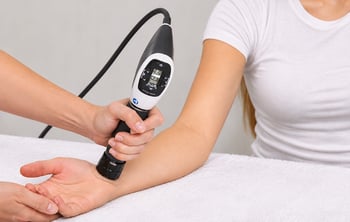 For patients with carpal tunnel syndrome, treatment has to fit a life that will continue to demand use of their hands, often in a professional capacity. Understanding those demands helps providers build a plan that combines symptom management with practical adjustments that patients can sustain over time.
Shockwave can operate as a key part of that plan alongside splinting, targeted rehabilitation, and changes to work habits or wrist positioning.
The research highlights several ways to combine these approaches, but applying them in practice involves decisions about patient selection, treatment settings, and how to assess response. Building this service requires work across the practice: providers learning treatment techniques, staff preparing for patient questions, and the team establishing scheduling and follow-up procedures.
A Shockwave partner that offers clinical training, educational resources, and ongoing implementation support can help your practice put those pieces in place and make Shockwave part of its continuum of care.
For the practice, successful integration also creates opportunities to promote sustainable growth:
- Attract patients seeking additional nonsurgical options. Patients who have experienced limited relief may be interested in Shockwave without understanding what treatment involves. Clear website content, patient education materials, and informed staff will help them understand the offering and take the next step toward an evaluation.
- Support retention throughout treatment. Patients need to understand why they should continue prescribed exercises or splinting while receiving Shockwave, and how follow-up visits contribute to their care. A well-coordinated team should reinforce those expectations and help patients recognize progress through changes in sleep, hand comfort, and everyday tasks.
- Strengthen relationships and referrals. Helping a patient handle tools comfortably or return to a valued hobby gives them a meaningful experience to share. Clear explanations and timelines throughout treatment help patients connect that improvement to the care your practice provided.
Finding the Right Shockwave Technology and Support for Your Practice
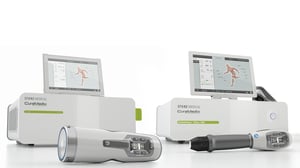 Evaluating Shockwave for carpal tunnel treatment also means considering how the technology will serve your broader patient population. The conditions you treat, the capabilities you want to add, and the training your team needs should all inform device selection.
CuraMedix distributes STORZ Medical Shockwave devices backed by hands-on training, continued education, and ongoing support. This partnership helps medical professionals develop proficiency with EPAT® and ESWT while working through the practical demands of clinical integration and patient communication.
Contact CuraMedix to discuss technology and support for your practice’s approach to carpal tunnel syndrome and broader musculoskeletal care.
Frequently Asked Questions
What treatment options are available for carpal tunnel syndrome?
Treatment may include night splints, activity adjustments, targeted rehabilitation, corticosteroid injections, and Shockwave. Providers select an approach based on symptom severity and nerve involvement. Surgery may be appropriate when symptoms persist or significant nerve damage is present.
Can Shockwave help patients with carpal tunnel syndrome?
Research has reported improvements in pain, symptoms, and hand function following Shockwave treatment in patients with mild-to-moderate carpal tunnel syndrome. It offers an additional nonsurgical option that providers can consider alongside rehabilitation and other care.
Why combine Shockwave with other carpal tunnel treatments?
Different treatments address different needs. A night splint helps maintain wrist position, rehabilitation supports movement, and activity adjustments reduce aggravating demands. Shockwave can complement these measures as part of a plan focused on symptom relief and comfortable hand use.
How is progress assessed during carpal tunnel treatment?
Providers assess changes in sensation, strength, symptoms, and daily function. Patients may notice fewer sleep interruptions or greater ease handling tools and small objects. Regular reassessment also helps identify persistent or worsening symptoms that require a change in care.
What is the best nonsurgical treatment plan for carpal tunnel syndrome?
The best plan reflects the patient’s diagnosis, symptom history, work demands, and treatment goals. For mild-to-moderate cases, providers may combine splinting, rehabilitation, activity adjustments, and additional options such as Shockwave. Follow-up helps determine whether that combination is meeting the patient’s needs.

