How often are you treating injured endurance runners looking to get back to competition? 
Before EPAT/ESWT Therapy, what was the condition of the two athletes?
Before receiving Shockwave therapy, both endurance runners exhibited clear signs of tendinopathy and accompanying pain, swelling, and impaired performance symptoms. Take a look at the at-a-glance patient details below:
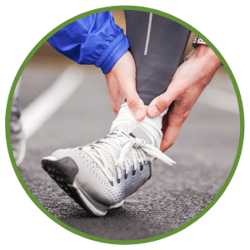 Runner A
- 25-year-old female marathon runner
- An atraumatic 3-month history of left greater than right Achilles tendinopathy
- Was preparing for the Chicago Marathon
- Had been running up to 110 km/wk
- Pain on palpation
- Thickening of the midportion Achilles' tendon, no discrete tearing or retraction
Runner B
- 25-year-old female ultramarathon runner
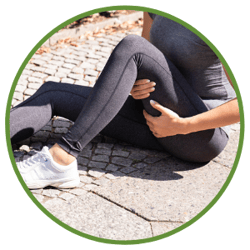
- 3-month history of atraumatic right proximal hamstring tendinopathy (PHT)
- Initially, she could run 64-80 km/wk
- Developed pain while sitting and bending forward to touch toes
- Focal tenderness to palpation over the proximal hamstring
- Mild strength deficit with supine plank and 30-degree resisted hamstring curl
- Intact strength with 90 degrees resisted hamstring curl
What treatment options were presented to the runners?
Few interventions exist that allow athletes to continue training throughout treatment. Extracorporeal Shockwave Therapy (ESWT) offers athletes a safe method for expedited return to competition, with little to no downtime.
Runner A was offered PT and interventional treatment of injections, prolotherapy or Radial Pressure Wave Therapy, also known as EPAT (Extracorporeal Pulse Activation Technology). Runner B's options included PT along with EPAT, corticosteroid injections, or injections.
The trouble with injections is that they require athletes to modify and limit training for optimum results. Treatment with EPAT has no such limitations, so it's ideal for runners like those in the study who wish to continue training throughout the treatment process.
Both runners expressed their desire to keep training and eagerly selected Shockwave therapy to be incorporated into their treatment plan.
What did the clinical outcome reveal about the use of EPAT/ESWT therapy?
Radial pressure wave therapy facilitated impressive outcomes for both featured athletes in the treatment of their respective tendinopathies.
Runner A
- Significant improvement in pain along with continued PT
- Ability to run 32 km per week following the 1st treatment with EPAT
- Completed Chicago Marathon 6-weeks after beginning treatment*
- Back to full training without pain 16 months after initial treatment
Runner B
- Noteworthy pain reduction
- Ability to run 12-15 km per training session while receiving treatment
- Four months after 1st treatment, she finished second in the women's race over 100km at 23,000 ft elevation*
- Back to full training without pain 10 months after initial treatment
Both runners expressed high satisfaction with their treatment outcome.
How can regenerative EPAT/ESWT therapy help your runners get to the finish line with ease?
As the athletes featured in the study, there is a noted preference among runners to stay on course with training throughout injury or dysfunction treatment. EPAT makes this not only feasible but entirely possible.
Added to the ever-growing body of evidence, these cases highlight the immeasurable value of using Extracorporeal Shockwave Therapy to treat athletes who desire to stay active in sport during treatment. Offering breakthrough treatments like Shockwave allow medical practices to attract new patients and deliver best-in-class outcomes to their patients.
Are you ready to attract a steady stream of new patients by adding EPAT/ESWT therapy to your continuum of care?
Did you know that CuraMedix offers our medical practice partners phenomenal marketing support to help to foster remarkable growth? It's one way we stand out; we want our practice partners to be fully supported from day one.
Our blogs inform, educate, and share the most valuable resources sought after by practice partners and future partners. Be sure to read more on running-related injuries,
Ready for a deep research dive on EPAT/ESWT in practice? Be sure to browse our offering of Level 10 Publications.
Have questions about EPAT/ESWT and wonder what adding it to your continuum of care would mean to your patients and your practice? Contact us today, and we'll connect you with one of our shockwave experts.
Shockwave Therapy for Runners FAQs
What is Shockwave therapy and how does it help runners with injuries?
Shockwave therapy uses acoustic pressure waves to stimulate tissue repair, reduce inflammation, and decrease pain in conditions like tendinopathy, allowing runners to continue training during treatment. It’s a non-invasive option that can speed recovery without extended downtime.
What types of running injuries respond well to Shockwave therapy?
Shockwave therapy is effective for common running injuries, including Achilles tendinopathy, hamstring tendinopathy, and other overuse tendon conditions. It can help athletes reduce pain and return to activity more quickly than traditional rest or injections alone.
Can runners continue training while receiving Shockwave therapy?
Yes, unlike some treatments that require rest or activity modification, Shockwave therapy allows runners to continue training throughout their treatment course, which is a key advantage highlighted in endurance athlete case studies.
How quickly can runners expect results with Shockwave therapy?
While individual responses vary, many runners experience pain reduction and improved function within a few sessions, and significant training milestones, like completing long runs or races, have been reported within weeks to months.
How does Shockwave therapy compare to injections for tendinopathy?
Shockwave therapy doesn’t require the prolonged rest often associated with injections like corticosteroids, and it promotes healing and pain relief through mechanical stimulation rather than chemical suppression of inflammation.
Does Shockwave therapy show good evidence in sports medicine?
Yes, research and clinical use support Shockwave therapy’s effectiveness in treating musculoskeletal conditions, and it’s increasingly integrated into sports medicine protocols due to evidence of accelerated recovery.
Can Shockwave therapy help prevent re-injury in runners?
By stimulating tissue repair and improving tendon and connective tissue health, Shockwave therapy may reduce the risk of re-injury when paired with appropriate training and rehabilitation protocols.
What types of Shockwave technology should practices consider offering?
Practices may consider radial pressure wave (EPAT®) and focused Shockwave technologies to address a range of athletic injuries, enhancing their regenerative care offerings and attracting athletes seeking advanced non-invasive options.