


What Is Regenerative Technology and Why Does It Matter for Knee Pain?
 Regenerative technology is reshaping how physicians and healthcare practitioners approach chronic musculoskeletal conditions. This is the first in a series dedicated to physician education, and we begin by spotlighting knee pain, which often stems from degeneration, overuse, overload, and delayed healing. In this series, we will feature a different diagnosis with each upcoming post, as it is high-value for physicians and medical specialists across various specialties.
Rather than focusing solely on symptom management, evidence-based technologies such as Extracorporeal Shockwave Therapy (ESWT/EPAT®) and Extracorporeal Magnetotransduction Therapy (EMTT®) are designed to support the body’s natural healing processes.
For medical providers, this represents a shift toward:
- Addressing underlying tissue dysfunction
- Advancing recovery timelines
- Expanding non-invasive treatment options
Shockwave treatment for knee pain, when integrated with EMTT, enables a more comprehensive regenerative approach that aligns with modern patient expectations and clinical goals.
How Does Shockwave Treatment for Knee Pain Work in Clinical Practice?
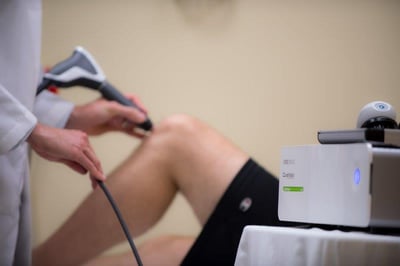 Shockwave therapy is widely used in orthopedic and sports medicine settings for chronic knee pain and soft tissue dysfunction.
Clinically, Shockwave treatment for knee pain supports:
- Mechanical stimulation of affected tissue
- Promotion of localized blood flow
- Activation of tissue remodeling processes
- Modulation of pain signaling
Providers often use Focused Shockwave (ESWT) to target deeper joint-related structures, while Radial Pressure Wave (EPAT) (may be used for more superficial or diffuse tissue involvement.
This flexibility makes Shockwave therapy a practical and scalable tool for expanding your continuum of care and providing modern solutions for a range of knee-related conditions.
What Role Does EMTT Play in Regenerative Approaches to Knee Pain?
EMTT complements Shockwave therapy by targeting the cellular environment.
In clinical practice, EMTT supports:
- Cellular signaling and metabolic activity
- Reduction of inflammatory response
- Bone and soft tissue regeneration
Because EMTT penetrates deeper tissue structures, it is often used in cases involving:
- Bone marrow lesions
- Degenerative joint conditions
- Chronic inflammatory states
This makes EMTT a valuable addition when addressing complex or persistent knee pain presentations.
Why Combine EMTT and Shockwave Treatment for Knee Pain?
In regenerative technology, combining complementary modalities is a core tenet of clinical application as it amplifies the positive effects of each treatment, producing more impressive outcomes.
In practice, providers use this combined approach to:
- Address both symptoms and underlying tissue dysfunction
- Support progressive loading and rehabilitation
- Enhance treatment tolerance and continuity
Rather than relying on a single modality, the EMTT-Shockwave combined approach contributes to a more adaptable, patient-centered plan of care.
Protocol Snapshot: EMTT-Shockwave Treatment for Knee Pain
Typical Clinical Flow (Example Only. Adjust per indication):
- Session frequency: 1 to 2 times per week
- Initial series: 3 to 6 treatments
- Reassessment: After 2 to 3 visits based on pain, function, and tissue tolerance
- Shockwave application: Targeted to tendon, insertional zones, or periarticular structures
- EMTT application: Applied to the broader joint environment or deeper tissue structures
- Progression: Adjust based on response, loading tolerance, and rehab progression
Clinical note:
Many providers integrate treatment alongside progressive loading and rehabilitation to ensure the likelihood of long-lasting outcomes.
Which Knee Conditions Respond Best to Regenerative Technology?
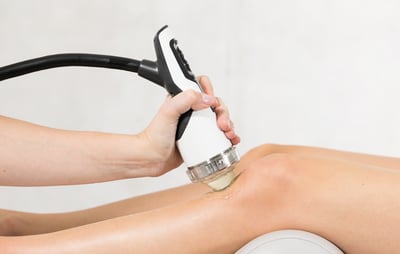 Our physician partners and KOLs (Key Opinion Leaders) are applying regenerative technology (ESWT, EPAT, and EMTT) for knee pain across a range of indications:
Common Clinical Presentations
- Patellar tendinopathy
- Quadriceps tendinopathy
- Degenerative joint-related pain
- Myofascial dysfunction around the knee
- Bone marrow lesions
Patient Profiles Often Considered
- Chronic or recurring knee pain
- Incomplete response to conservative care
- Athletes or active individuals seeking return to function
- Patients aiming to delay or avoid surgical intervention
Clinical Integration Strategies for Regenerative Technology in a Busy Practice
Successful implementation depends on how these technologies are integrated—not just adopted.
Key Integration Principles
- Establish clear treatment protocols based on the indication
- Reassess patient response early (2–3 visits)
- Align treatment with rehabilitation and load management
- Educate patients on expectations and progression
Operational Considerations
- Treatments can be delivered same-day or across alternating visits
- Short treatment series (3–6 sessions) are common starting points
- Plans should be adjusted based on functional response and treatment goals
This structured approach supports consistency in both clinical outcomes and workflow efficiency.
Explore More on Regenerative Technology and Combined Approaches
To deepen your understanding of regenerative technology, explore:
- The Power of Energy-Based Treatments: How Shockwave and EMTT Are Transforming Regenerative Medicine
- Science Validates: ESWT and EMTT Accelerate Bone Regeneration for Faster Healing
- Shockwave Therapy and EMTT: Benefits of Incorporating Pre and Post-Surgery
- Revolutionizing Patient Care: How Shockwave and EMTT Are Speeding Up Athlete Recovery Time
FAQ: Regenerative Technology and Shockwave Treatment for Knee Pain
Which patients are best suited for an EMTT-Shockwave care plan?
Ideal candidates include patients with chronic tendinopathy, persistent myofascial pain, degenerative joint pain, or delayed recovery not responding to standard care.
What does a practical EMTT-Shockwave treatment course look like in a busy clinic?
Many clinicians begin with 3–6 sessions, reassessing after 2–3 visits for pain, function, and tolerance, then adjusting based on response.
How can EMTT-Shockwave be integrated with PT, injections, and orthobiologics?
These therapies are often coordinated with rehab and procedural timelines to support tissue conditioning and maintain continuity of care.
How are EMTT and Shockwave therapy used together within a treatment plan?
Providers combine these modalities based on tissue type and clinical goals, often sequencing or co-applying to reinforce treatment effects.
What outcomes should providers expect with regenerative technology for knee pain?
Most patients show gradual improvements in pain, function, and loading tolerance, with variability depending on chronicity and adherence to rehab.

