


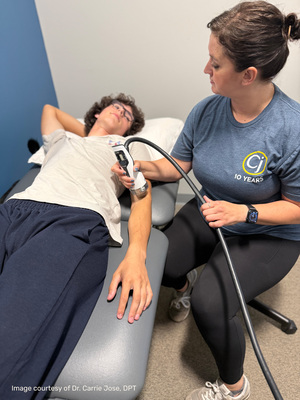
An elbow injury can make even a firm handshake or a bag of groceries something to brace for. For patients with lateral or medial epicondylitis, persistent pain can interrupt work, limit exercise, and keep a favorite sport off the calendar. Recovery can be especially frustrating when the movements that aggravate symptoms are also part of how they earn a living.
For medical professionals treating these patients, Shockwave technologies like EPAT® (Extracorporeal Pulse Activation Technology, or Radial Pressure Wave) and ESWT (Extracorporeal Shockwave Therapy, or Focused Shockwave) offer additional options to consider when symptoms persist despite rehabilitation and activity modification.
Below, we explore how Shockwave can fit into treatment for lateral and medial epicondylitis, the research supporting its use, and what meaningful improvement can mean for patients eager to return to their routines.
Evidence-Based Treatment for Lateral and Medial Epicondylitis
Commonly called tennis elbow and golfer’s elbow, these conditions affect different tendon attachments around the elbow. Both can involve repetitive loading that leaves patients struggling with pain and reduced function.
Shockwave for Lateral Epicondylitis
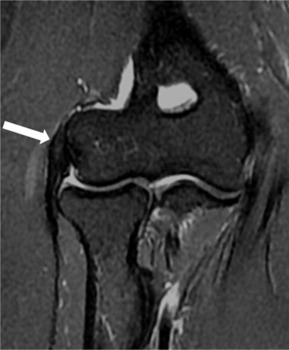 Lateral epicondylitis, commonly called tennis elbow, affects the tendon attachment on the outside of the elbow associated with wrist extension. Patients may experience pain with gripping and lifting, whether they are swinging a racquet, carrying a toolbox, or picking up a full teakettle.
Treatment commonly includes activity modification, bracing, and rehabilitation exercises to build strength and improve tolerance for loading. Giving the affected tissues a break can be difficult, however. A patient may step away from tennis, for example, but continue stressing the same tendons throughout the workday, leaving them frustrated when symptoms persist.
EPAT/ESWT can complement these measures by targeting the painful tendon region while rehabilitation addresses strength and the demands of returning to activity. For medical professionals, this creates an opportunity to expand treatment for patients who are still struggling with everyday tasks.
Shockwave for Medial Epicondylitis
Medial epicondylitis, or golfer’s elbow, affects the tendon attachments on the inside of the elbow associated with wrist flexion and forearm pronation. Patients may describe tenderness along the inner elbow, pain extending into the forearm, or a weakened grip. Swinging a golf club, turning a screwdriver, and lifting weights can all become uncomfortable.
Initial care commonly includes reducing aggravating activities, using a brace where appropriate, and progressing through stretching and strengthening exercises. Persistent symptoms can make that progression frustrating: a patient may feel better with rest, only to encounter pain again when work or training demands increase.
EPAT/ESWT offers an additional treatment option for the affected tendon region alongside rehabilitation. For patients, successful care means being able to use the arm more comfortably and reliably. Providers can assess progress through changes in grip tolerance, work tasks, and sport participation, using those improvements to guide the next stage of rehabilitation.
 “Shockwave therapy has been practice-changing for my patients with lateral and medial epicondylitis because it offers an effective, non-invasive treatment option with minimal downtime, allowing athletes and active individuals, including tennis and pickleball players and golfers, to continue participating in the activities they enjoy. For more refractory cases, I’ve also had good success combining Shockwave with orthobiologic treatments, providing an alternative route for patients hoping to avoid more invasive interventions.”
Dr. Chris Ha, D.O., Physiatrist at Mayo Clinic, Phoenix, Arizona
Research Highlights: Shockwave and Epicondylitis
30+ years of Shockwave research has built an immense body of evidence on its positive impact on a wide variety of musculoskeletal conditions, including epicondylitis.
- Nearly 60% reduction in pain at 30 days: In a 50-patient study of lateral epicondylitis, patients receiving five Shockwave sessions experienced an average pain-score reduction of approximately 60%, compared with 37% among those receiving anti-inflammatory medications, topical treatments, laser, and ultrasound. The findings offer an encouraging example of short-term symptom improvement for patients struggling with persistent elbow pain.
Study: The Effectiveness of Shockwave Therapy in Patients with Lateral Epicondylitis. Current Health Sciences Journal, 2018.
- Greater pain relief and functional improvement: A 2024 randomized trial of 60 patients with lateral epicondylitis compared Focused Shockwave, ultrasound, and placebo ultrasound, with all groups receiving deep friction massage. At 12 weeks after treatment, activity-related pain had decreased by approximately 76% in the Shockwave group versus 45% in the ultrasound group. Patient-reported pain and disability scores also improved significantly more with Shockwave, a meaningful finding for patients whose elbow symptoms interfere with everyday activities.
Study: Focused shock wave and ultrasound therapies in the treatment of lateral epicondylitis - a randomized control trial. Scientific Reports, 2024.
 Promising results for newly diagnosed tennis and golfer’s elbow: A small randomized study of 22 patients found that three weekly Shockwave sessions improved pain and function in patients with lateral or medial epicondylitis. Steroid injections provided greater early relief, but differences in clinical improvement were no longer significant at four and eight weeks. At eight weeks, 67% of Shockwave patients rated their outcome good or excellent, compared with 40% in the injection group, encouraging findings that support incorporating Shockwave as an early treatment option.
Study: Effectiveness of Initial Extracorporeal Shock Wave Therapy on the Newly Diagnosed Lateral or Medial Epicondylitis. Annals of Rehabilitation Medicine, 2012.
- Lasting improvement in complex golfer’s elbow cases: A three-patient case series explored combined Focused Shockwave and Radial Pressure Wave using STORZ Medical technology for medial epicondylitis with accompanying ulnar nerve instability. Two patients experienced substantial pain relief and functional improvement that persisted at follow-ups more than three years after treatment.
Study: Case Report: Application of extracorporeal shockwave therapy in medial epicondylitis with concomitant ulnar nerve instability: a case series with long-term follow-up. Frontiers in Rehabilitation Sciences, 2026.
Shockwave as Part of Multimodal Epicondylitis Treatment
For medical professionals treating epicondylitis, Shockwave can expand the care available within the practice. EPAT/ESWT can be incorporated alongside rehabilitation, activity modification, and careful assessment of the movement patterns that continue to load the affected tendons. This gives providers additional options for patients whose symptoms remain an obstacle to work, exercise, and everyday activities.
EMTT® (Extracorporeal Magnetotransduction Therapy) can also enter the discussion as a complementary technology within a broader musculoskeletal practice. Distinct from the acoustic energy used in Shockwave, EMTT uses electromagnetic fields and may be incorporated into combined treatment strategies where clinically appropriate. Its inclusion for epicondylitis should be guided by provider judgment and supporting evidence, which remains more limited for this specific condition.
For the practice, developing expertise across these technologies creates opportunities to:
- Attract patients seeking additional treatment options. Patients frustrated by persistent symptoms may actively look for a provider offering Shockwave. Explaining how it fits into a comprehensive treatment plan helps prospective patients understand what your practice can offer.
- Support patient retention throughout recovery. A clear treatment course, realistic expectations, and regular assessments help patients understand why continued care matters. Tracking practical milestones (such as improved tolerance for gripping or lifting) makes progress easier to recognize and gives providers a basis for adjusting the plan.
- Build lasting patient relationships and referrals. Helping patients return to valued activities can strengthen trust in the practice. A patient who understands the care they received and experiences meaningful improvement has a concrete story to share with teammates, coworkers, and family.
Realizing this potential requires provider proficiency and a team that can explain the role of each treatment. When clinical care, staff education, and patient communication practices are aligned, Shockwave can become a consistent revenue-generating part of the practice’s approach to musculoskeletal care.
Learn more about incorporating Shockwave and EMTT into everyday MSK practice.
Finding a Shockwave Partner for Lateral and Medial Epicondylitis Treatment
Successfully incorporating Shockwave into your practice takes both the right technology and the right expertise to unlock its full potential. CuraMedix distributes STORZ Medical Shockwave and EMTT devices backed by a partnership that includes hands-on training, ongoing education, and support to help medical professionals build clinical proficiency and expand their treatment capabilities.
Contact the CuraMedix team to explore how Shockwave can fit into your approach to lateral and medial epicondylitis, in addition to your broader patient care strategy.
Frequently Asked Questions
What Is the Difference Between Lateral and Medial Epicondylitis?
Lateral epicondylitis, or tennis elbow, affects the tendon attachment on the outside of the elbow associated with wrist extension. Medial epicondylitis, or golfer’s elbow, affects the tendon attachments on the inside associated with wrist flexion and forearm pronation. Both can cause pain during gripping, lifting, and repetitive activities, including work and sports.
Can Shockwave Help Treat Tennis Elbow and Golfer’s Elbow?
Research has reported improvements in pain and function following Shockwave treatment for both conditions, although the evidence is more extensive for lateral epicondylitis. Medical professionals should consider the patient’s diagnosis, symptom history, previous treatments, and functional goals when determining whether EPAT/ESWT belongs in the treatment plan.
How Many Shockwave Sessions Are Used for Epicondylitis?
Published studies have used treatment courses ranging from three to five sessions, often spaced approximately one week apart. These schedules are examples rather than a universal protocol. The appropriate number of sessions and treatment settings depend on the technology used, the patient’s tolerance, and their response to care.
How Quickly Can Patients Notice Improvement?
Improvement can develop over several weeks and continue after the treatment series ends. In one lateral epicondylitis trial, patients receiving Focused Shockwave showed progressively lower pain scores through the 12-week follow-up. Providers should establish realistic expectations and assess changes in both symptoms and everyday function.
Can Shockwave Be Combined With Other Epicondylitis Treatments?
Yes. Shockwave can be incorporated into a broader plan that includes rehabilitation, activity modification, and adjustments to work or sport technique. These components address different aspects of recovery, including the repeated loading that may continue to aggravate the affected tendons.
What Is the Best Device for Treating Tendinopathies in an Orthopedic Practice?
Shockwave devices offer an evidence-based, non-invasive option for treating tendinopathies, backed by decades of research and reported patient satisfaction rates of 80% or higher across studied applications. Radial Pressure Wave (EPAT®) and Focused Shockwave (ESWT) can support care for conditions including lateral and medial epicondylitis. Device selection should reflect each patient’s condition and recovery goals, with Shockwave incorporated into a multimodal treatment plan alongside rehabilitation, activity modification, and other appropriate care.

