


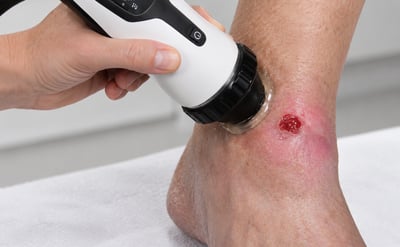
 A stubbornly unhealed wound can leave patients caught in a cycle of pain, repeated appointments, and frustrating uncertainty. For medical professionals, this stalled healing raises a difficult question: when traditional approaches fall short, how can we do more for our patients?
That question guided a recent Institute for Tissue Regeneration & Repair webinar sponsored by CuraMedix, featuring Dr. Eric Lullove, a board-certified podiatric physician, surgeon, and Chief Executive and Medical Officer of the West Boca Center for Wound Healing in Coconut Creek, Florida. With more than 20 years of clinical and surgical experience, Dr. Lullove has dedicated his work to wound care, limb salvage, and emerging treatment technologies.
Dr. Lullove explained his research on the potential of combining Extracorporeal Shockwave Therapy (ESWT) and Extracorporeal Magnetotransduction Therapy (EMTT®) to support healing in persistent wounds. His findings offer encouraging signs of wound closure and pain reduction, opening new possibilities about how these technologies could fit into multimodal wound management.
Watch Dr. Lullove’s full presentation here, or keep reading for key findings and clinical insights from the webinar.
Want to take a deeper dive into the science? Explore the full peer-reviewed study, by Dr. Lullove and co-authored with Dr. Karsten Knobloch, including the methodology, treatment parameters, and clinical outcomes.
The Painful Challenge of Hard-to-Heal Wounds
In Dr. Lullove’s study, wounds averaged less than three square centimeters, yet patients reported average pain levels above eight out of ten. With a mean age of 82, these patients were also managing venous insufficiency, hypertension, and, in many cases, diabetes.
Traditional treatment approaches all have important roles to play: dressings can protect the wound, debridement removes damaged tissue, and compression helps manage swelling associated with venous disease. Yet in many cases, healing can remain stalled, prolonging both discomfort and the need for ongoing care.
Why Combine Shockwave and EMTT for wound treatment?
Shockwave and EMTT deliver different forms of energy to tissue. Shockwave uses acoustic pressure pulses to create a mechanical stimulus that cells respond to through a process called mechanotransduction. In wound care, this treatment is used to encourage repair activity, including new blood vessel formation and tissue growth.
EMTT uses rapidly changing magnetic fields to induce electrical activity within tissue. Its applicator does not need direct contact with the patient, allowing treatment to take place while a wound remains dressed.
A study of 86 patients with rotator cuff tendinopathy had reported better pain and shoulder-function outcomes at 24 weeks when EMTT was added to Shockwave. This research provided a rationale for Dr. Lullove to explore the combination in wound care.
Dr. Lullove used the C-ACTOR handpiece, which distributes energy across a broad, shallow treatment area suited to the wound bed, in addition to EMTT.
Combining these treatments as part of a multimodal treatment approach allows a medical professional to use these different stimuli to support complementary aspects of repair. As Dr. Lullove explained, “They enter the cell at different doors, but they appear to arrive in the same room together.”
Inside Dr. Lullove’s Research: Treating Wounds That Stopped Progressing
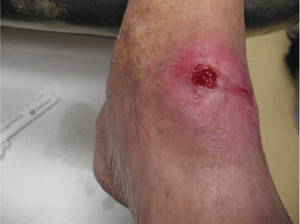 To evaluate the potential impact of Shockwave and EMTT in wound care, Dr. Lullove reviewed the records of 15 patients who had received the combined treatment in his wound clinic. Each had a lower-extremity wound following Mohs surgery that had failed to progress with standard care. Circulation was assessed before treatment, and patients with active infections requiring systemic antibiotics were excluded.
The treatment course was incorporated into regular dressing visits as follows:
- Eight sessions over four weeks: Patients received both technologies twice weekly, beginning with EMTT and followed by Shockwave through the C-ACTOR handpiece.
- Low-energy Shockwave application: Treatment was intended to stimulate cellular repair activity within the wound bed. A sterile drape covered the handpiece at every session.
- Continued local wound care: Patients returned to the clinic for dressing changes, giving the team regular opportunities to assess the wound and manage care.
- Measurement before debridement: Wound area and pain were assessed at four weeks before sharp debridement was performed. Continued wound care and follow-up then tracked progress through week eight.
Dr. Lullove deliberately departed from the usual care route by withholding compression to observe the response to the energy-based treatments without that additional intervention, while emphasizing that compression remains standard care for wounds with a venous component.
Encouraging Results in Wound Closure and Pain Reduction
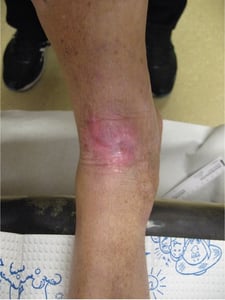 By the end of the four-week treatment course, every wound in the series had become smaller. The improvement was accompanied by a substantial reduction in pain. The main results included:
- 69.5% reduction in average wound area at four weeks. Mean wound size decreased from 2.89 to 0.88 square centimeters.
- Approximately 72% reduction in average pain scores. Mean reported pain fell from 8.1 to 2.3 out of ten over the same period. Every patient experienced a meaningful decrease in pain, and those whose wounds closed reported no pain at closure.
- Four wounds closed by week four, with 13 of the 15 wounds closed by week eight.
- An average of 5.2 weeks to closure among those that closed during follow-up. Closure constituted complete skin coverage with no drainage, confirmed on examination. The two remaining wounds were nearly closed at eight weeks but did not yet meet that definition. Both were subsequently confirmed closed by week twelve.
- No treatment-related adverse events were recorded in the reviewed patient charts, including infection, bleeding, or skin breakdown.
For Dr. Lullove, these findings are part of an ongoing effort to refine how energy-based treatments can help his patients. “I’m still learning how to manipulate the energy fields and how to manipulate the devices so that I can try to get the best therapeutic effect for my patients.” Continued research and shared experience among clinicians will help clarify where these technologies can make the greatest contribution to wound care.
Learn More About Integrating Shockwave and EMTT with Your Practice
Thank you to Dr. Lullove for sharing his research and clinical insights with the CuraMedix community. Watch the full webinar for a closer look at the study and its implications for wound care.
If you are interested in a broader look at the research on Shockwave in wound care, our Wound Care Resource Hub is a great place to get started.
Choosing the right devices for your practice starts with understanding your clinical goals and the applications you want to support. An experienced Shockwave partner can help you evaluate those options and provide the training and ongoing support needed to integrate them into patient care.
To explore how Shockwave and EMTT could fit into your practice, contact the CuraMedix team.
Frequently Asked Questions
Can Shockwave Help Hard-to-Heal Wounds?
Shockwave is being studied as an additional treatment for wounds that have stopped progressing with standard care. Research has reported encouraging healing outcomes, although its role varies by wound type and requires further investigation.
Why Combine Shockwave and EMTT for Wound Care?
Shockwave uses acoustic pressure pulses, while EMTT uses magnetic fields to stimulate tissue. Combining them may support repair through complementary pathways, but research is still needed to determine whether the combination improves outcomes over either technology alone.
What Results Have Been Reported with Combined Shockwave and EMTT?
A small study of 15 patients with persistent lower-extremity wounds after Mohs surgery reported approximately 70% reduction in average wound area and 72% reduction in average pain scores after four weeks. Thirteen wounds closed by eight weeks. Patients also received ongoing wound care, and the study had no control group.
Does Treatment Replace Standard Wound Care?
No. Shockwave and EMTT are being explored within comprehensive wound management. Appropriate dressings, debridement, circulation and infection assessment, and compression when indicated remain important parts of care.

