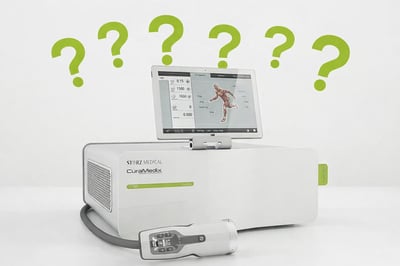
 Many medical professionals have heard the false claim: “There’s no evidence to support Shockwave therapy.”
Whether the claim is delivered with confidence and certainty or stated dismissively, this assertion is entirely inaccurate. In fact, this misguided proclamation does not reflect how Shockwave therapy is truly perceived in the current scientific landscape.
Shockwave therapy has been studied for decades, continues to generate new peer-reviewed research, and is widely applied across musculoskeletal and regenerative medicine disciplines worldwide.
The persistence of this myth points not to a lack of evidence but rather to a gap in education, awareness, and clinical exposure. Given the long-proven efficacy of Shockwave therapy, this knowledge gap is unfortunate for medical providers and patients who could benefit from this safe regenerative treatment.
This article explores the origins of misconceptions, what contemporary research actually shows, and why education is essential for translating evidence into optimal patient outcomes.
What Is Shockwave Therapy and How Many Types Exist?
Shockwave therapy is a non-surgical treatment approach that restores the body’s normal healing process via acoustic energy that ignites a cascade of biological effects in tissue, supporting pain reduction, healing, and functional recovery. In clinical practice, two distinct types of Shockwave technology exist, each with unique and complementary applications.
Radial Pressure Wave (EPAT®)
- Disperses acoustic energy over a broader surface area
- Best suited for superficial tissues, myofascial structures, and diffuse pain patterns
- Commonly used to improve circulation, reduce muscle tension, and support soft-tissue remodeling
- # 1 myth about EPAT
Focused Shockwave (ESWT)
- Concentrates acoustic energy at a precise, controlled depth
- Ideal for more profound or more complex pathology, including tendinopathies, enthesopathies, and bone-related conditions
- Enables targeted energy delivery with minimal impact on surrounding tissue
Importantly, Radial Pressure Wave and Focused Shockwave are not competing technologies. Each can be used independently or strategically combined to address different tissue depths and clinical objectives; often enhancing outcomes when integrated into the same plan of care.
Both modalities are also commonly paired with complementary therapies, including EMTT (Extracorporeal Magnetotransduction Therapy), biologics, and other regenerative or rehabilitative interventions, to support synergistic healing responses and optimize patient outcomes.
Why Is Shockwave Therapy Still Misunderstood?
Shockwave therapy is a non-invasive, device-based treatment option, and despite its well-documented clinical history, misunderstanding remains common due to:
- Inconsistent terminology across studies and devices
- Variable device quality in the marketplace
- Limited inclusion in traditional medical training pathways
When technologies with different mechanisms, energy profiles, and clinical validation are grouped together, conclusions about effectiveness can be distorted. Such distortions contribute significantly to the propagation of misinformation and to confusion among medical practitioners.
For a clarifying scientific deep dive, watch this important educational webinar, “Demystifying Shockwave: The Technologies. The Evidence. The Truth,” led by Prof. Dr. Karsten Knobloch, MD, FACS. It’s an insightful, fact-driven webinar that offers a precise, evidence-based examination of Shockwave therapy, distinguishing between technologies, clarifying common misconceptions, and grounding clinical use in sound science. It serves as a reliable, expert-led resource for clinicians seeking trustworthy guidance on appropriate application, device differentiation, and evidence-informed decision-making.
How Long Has Shockwave Therapy Been Studied and Used Clinically?
 Shockwave therapy has been in clinical use for over 30 years, with early adoption in urology and orthopedics. Since then, its applications have expanded significantly.
Today, Shockwave therapy is studied and used in:
- Sports medicine
- Orthopedics
- Pain management
- Physical therapy and rehabilitation
- Pre- and post-surgical intervention
- Podiatry
- Regenerative medicine and wound care
- Burn care
- Aesthetics
Emerging usage in the following fields:
- Neurology
- Urology
- Pelvic Floor Treatment
Significantly, the volume of published research on Shockwave therapy has accelerated considerably over the last decade, reflecting growing interest and refinement. This shows increased clinical interest and thirst for more real-world knowledge to put into practice with patients.
Additionally, patient demand for safe, non-surgical alternative treatments is on the rise, and they seek out regenerative treatments by name that do not require lengthy periods of downtime so they can return to activities they love quickly.
What Does the Research on Shockwave Therapy Actually Show?
When reviewed appropriately, contemporary research consistently demonstrates that Shockwave therapy:
- It is safe when applied according to evidence-based protocols
- Improves pain and functional outcomes for defined indications
- Stimulates biological responses associated with tissue regeneration
Outcomes are condition-specific and protocol-dependent, underscoring the importance of understanding how Shockwave therapy is applied and not relying solely on its use.
Evidence Snapshot: Recent Peer-Reviewed Research (2022–2025)
Study 1
Title: “Best Practices for Extracorporeal Shockwave Therapy in Musculoskeletal Medicine”
Authors and Journal: Tenforde et al., 2022; PM&R
Key efficacy insight: This thorough paper synthesizes clinical literature demonstrating that Shockwave therapy can produce consistent improvements in pain and function across musculoskeletal conditions when evidence-based protocols are applied.
Study 2
Title: “Efficacy and Safety of Extracorporeal Shock Wave Therapy for Upper-Limb Tendinopathies: A Systematic Review and Meta-Analysis”
Authors and Journal: Xiong et al., 2024; Frontiers in Medicine
Key efficacy insight: This meta-analysis of randomized controlled trials found that ESWT significantly reduced pain and improved functional outcomes in patients with upper-limb tendinopathies compared to control interventions.
Study 3
Title: “Effectiveness of Extracorporeal Shockwave Therapy for Knee Osteoarthritis: A Systematic Review and Meta-Analysis”
Authors and Journal: Liao et al., 2024; Journal of Clinical Medicine
Key efficacy insight: The review reports clinically meaningful reductions in pain and improvements in function among patients with knee osteoarthritis treated with ESWT. Across studies, Shockwave therapy demonstrated favorable outcomes compared to placebo or conservative care, supporting its role as a noninvasive treatment option.
Study 4
Title: “Recommendations for Use of Extracorporeal Shockwave Therapy in Sports Medicine: An International Modified Delphi Study"
Authors and Journal: Rhim et al., 2025; British Journal of Sports Medicine
Key efficacy insight: Based on a broad review of peer-reviewed evidence, the international consensus panel recognizes Shockwave therapy as an effective treatment across multiple musculoskeletal indications, citing reproducible improvements in pain, function, and tissue healing when appropriately applied.
▶️ Still Have Questions? Review the Evidence
For clinicians seeking primary-source data, contemporary Shockwave therapy research includes peer-reviewed randomized trials, systematic reviews, and international consensus guidance.
Recent publications examine:
- Condition-specific outcomes across musculoskeletal, orthopedic, and regenerative indications
- Mechanisms of action and tissue regeneration pathways
- Clinical variables that influence outcomes, such as device technology, dosing parameters, and patient selection
Reviewing the literature within its appropriate clinical context is essential for accurate interpretation and responsible application.
Why Do Some Medical Professionals Still Scoff and Believe That There’s “No Evidence”?
The persistence of this belief is rarely rooted in data review.
More often, it reflects:
- Limited exposure during formal training
- Confusion caused by mixed-quality technologies
- Lack of centralized, clinically translated education
In short, the issue is not the absence of research; it is inconsistent access to it.
Is Shockwave Therapy Widely Accepted in Clinical Practice Today?
Globally, Shockwave therapy is increasingly integrated into:
- Private medical practices
- Medical group practices
- Hospital-based programs
- Multidisciplinary outpatient clinics
- Collegiate, professional, and elite sports medicine organizations
Its growing adoption parallels the expansion of high-quality research and structured education.
Why “Not All Shockwave Is Created Equal” Matters to the Evidence Conversation
Clinical outcomes cannot be generalized across all devices or protocols.
Research is:
- Technology-specific
- Indication-specific
- Dependent on treatment parameters
When conclusions are drawn without accounting for these variables, evidence is often misinterpreted.
Discerning medical professionals worldwide identify STORZ Medical as the market leader in shockwave and regenerative technologies. Dive into the blogs below for details:
- Why are STORZ Medical Shockwave Devices Considered the Gold Standard?
- Why Choose STORZ Medical for Your Practice's Shockwave Devices?
How Education Connects Evidence to Patient Outcomes
Evidence alone does not ensure success. Ongoing education is essential to provide the best patient outcomes.
Education enables providers to:
- Interpret studies accurately
- Apply protocols responsibly
- Align treatment with patient expectations
This is where research becomes repeatable clinical value.
Why Evidence-Based Application Supports Practice Growth
When Shockwave therapy is applied appropriately:
- Patient outcomes improve
- Clinical confidence increases
- Treatment adoption becomes sustainable
Education protects both patient trust and long-term practice performance.
Institute for Tissue Regeneration & Repair Conferences
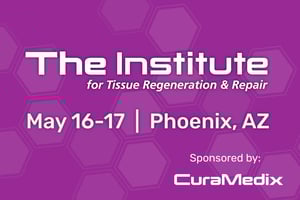 Held twice annually, these immersive conferences combine hands-on training with expert-led lectures, panels, and case-based discussions in a multidisciplinary learning environment.
The next Institute conference takes place May 15–17 in Phoenix (1.5 days) and is designed to support practical, application-driven education in a larger group setting.
Explore key insights from the December 2025 Boston conference here.
Frequently Asked Questions
What is the main misconception about Shockwave therapy addressed in this article?
The article dispels the common myth that there is “no evidence to support shockwave therapy,” explaining that this belief stems from gaps in education, awareness, and clinical exposure, rather than a lack of research or efficacy data.
Is Shockwave therapy evidence-based?
To be clear, Shockwave technologies are evidence-based and backed by Level 1 studies.
Shockwave therapy is efficacious for numerous medical conditions, and countless historical and contemporary peer-reviewed studies, meta-analyses, and consensus guidance support its use for defined clinical indications.
How does clinical research support the effectiveness of Shockwave therapy?
Historical and recent peer-reviewed studies and meta-analyses consistently demonstrate that shockwave therapy is safe, improves pain and functionality for specific conditions, and stimulates biological tissue regeneration when evidence-based protocols are followed.
How should clinicians evaluate literature on condition-specific studies?
By reviewing condition-specific studies within an appropriate clinical context, medical professionals can weigh study outcomes against their own clinical knowledge. Then, when applicable, consider integrating methodologies that align with your practice. If you want more information on a condition, search further for additional supportive evidence that would be most valuable to your medical practice and the patients you treat.
Why do Shockwave therapy outcomes vary across clinical settings?
Clinical outcomes can vary based on factors such as the device technology, patient selection, treatment parameters, clinician training, and the integration of shockwave therapy into a broader plan of care. Evidence consistently shows that adherence to evidence-based protocols and appropriate application are key drivers of successful outcomes.
How is Shockwave therapy integrated into modern musculoskeletal treatment plans?
Shockwave therapy is commonly used alongside rehabilitation, physical therapy, EMTT, biologics, and other interventions to support tissue healing, pain reduction, and functional recovery. When applied as part of a coordinated treatment strategy, it can enhance overall clinical outcomes.
What role does education play in the successful use of Shockwave therapy?
Ongoing education is essential for accurately interpreting studies, applying protocols responsibly, and connecting research to repeatable clinical value, ultimately supporting better patient outcomes and sustainable practice growth.
Conclusion: The Evidence Has Always Been There, Education Makes It Actionable
The claim that Shockwave therapy lacks evidence is not supported by current research.
What determines success is not awareness of studies alone, but the ability to interpret and apply them responsibly. When evidence, education, and validated technology align, Shockwave therapy becomes a credible and effective part of modern clinical care.
Contact us to connect with one of the experts on our team who is ready to help you achieve your clinical goals and practice priorities.